Scoil Bhríde Straffan N.S. School Self Evaluation (SSE)
In 2012, all primary schools in Ireland were asked to commence a process of School Self Evaluation (SSE). The SSE process provides a way for schools to systematically plan for, implement and monitor changes and improvements in aspects of practice that they have identified as priorities.
Phase 1: (2022-2023) was to involve a ‘Review Year for Schools’ of the impact that COVID had on the experiences of their students and a space to initiate a wellbeing review and development cycle. In Phase 2: (2023-2026): schools have the autonomy to choose their SSE focus areas but should follow through with a plan that focuses on wellbeing.
School Self Evaluation – A Six Step Process:
SSE is a collaborative, inclusive, and reflective process of internal school review. It is an evidence-based approach that involves gathering information from a range of sources, and then making judgements. All of this is done with a view to bringing about improvements in students’ learning.
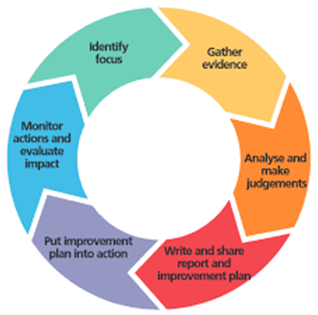
Step 1: Identify Focus:
In this step, schools should identify the focus for the inquiry
Step 2: Gather Evidence:
In this step, the types of evidence required will depend on the focus of the SSE and the domains and standards listed in the SSE Guidelines that the school has used to focus the evaluation. Evidence should be collected from a variety of sources, including teachers, learners, parents and school management.
Step 3: Analyse and Make Judgements:
In this step, the evidence collected in step 2 should be analysed. Schools should then use the statements of practice to make judgements on the aspects of provision that are already effective and identify those areas that need to be improved.
Step 4: Write and Share Report and Improvement Plan:
In this step, the school then prepares a short Report and Improvement Plan, based on the strengths and areas for improvement identified in step 3. The plan should detail the improvement targets and the actions that will help the school to bring about the improvements. A summary report and plan should be shared with the school community.
Step 5: Put Improvement Plan Into Action:
This is the most crucial part of the six-step process. This is where, individual teachers, subject departments and school leaders implement the agreed actions to bring about the desired improvement. This step will look different in every school and for evaluation.
Step 6: Monitor Actions and Evaluate Impact:
This step is closely linked to step 5. As the improvement plan is being put into action, the school monitors the actions as they are rolled out. It is important to consider the experiences of teachers and learners as well as the impact of the changes on learning. Sometimes, there may be evidence to suggest that the targets and actions need to be adjusted, reframed or amended. This is all part of the improvement process.